

Dr. Sridhar Reddy
Shoulder & Knee Specialist
9665838731, 9642145955
www.drsridharreddy.in
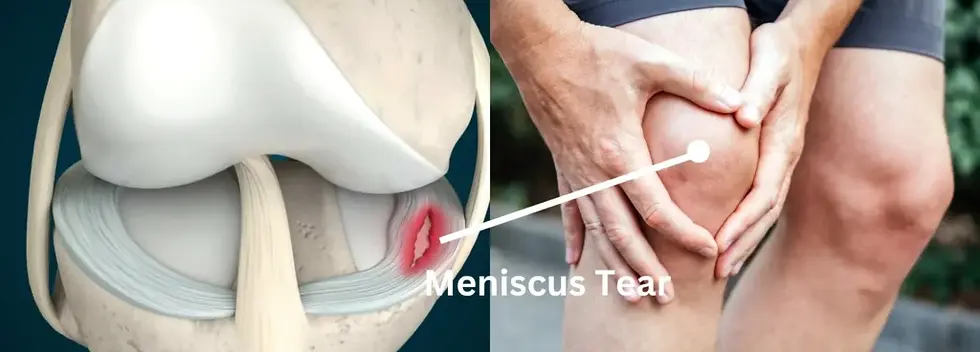
Meniscus Injury
Meniscal injuries are common knee problems, affecting everyone from athletes to older adults. A torn meniscus may cause pain and limit daily activities, so understanding the condition and its management is important for those seeking recovery and long-term joint health.
What Is a Meniscus Injury?
The meniscus is a C-shaped cartilage in the knee that acts as a shock absorber between the femur (thigh bone) and tibia (shin bone). Each knee has two menisci—medial (inner) and lateral (outer). When the meniscus is torn due to trauma or degeneration, it is called a meniscal injury or tear.
Causes of Meniscal Tears
Meniscus injuries most often occur when:
-
The knee twists or rotates suddenly while bearing weight
-
A person squats or lifts heavy objects with poor form
-
There’s a direct blow to the knee (common in contact sports)
-
Over time, age-related wear and tear cause degeneration, predisposing older adults to tears even during simple movements.
Symptoms of Meniscal Injuries
Typical signs and symptoms include:
-
Pain in the knee, especially when twisting or rotating
-
Swelling and stiffness, often worsening within a day
-
Locking or catching sensation in the knee
-
Difficulty fully straightening or bending the knee
-
Knee feels unstable or may “give way”.
Diagnosis
Diagnosis generally involves:
-
Medical history and physical examination (McMurray, Thessaly tests)
-
Imaging tests: X-rays to rule out bone injury, and MRI scans to confirm a tear and its location.
Treatment Options
Non-Surgical
-
RICE protocol: Rest, Ice, Compression, Elevation, especially in the early phase
-
NSAIDs (Non-steroidal anti-inflammatory drugs): To manage pain and reduce swelling (e.g., ibuprofen)
-
Physical therapy: Restores strength, balance, and range of motion
-
Small or degenerative tears may heal on their own with these basic treatments.
Surgical
Recommended if:
-
Tear is large, unstable, or doesn’t heal with conservative management
-
Persistent pain, knee locking, or significant loss of function
Procedures include:
-
Meniscus repair: Suturing the torn pieces—ideal for tears in areas with good blood supply (the “red zone”)
-
Partial meniscectomy: Removal of the damaged part, usually for tears in avascular regions (the “white zone”)
-
Meniscus transplant: For younger patients with severe loss of meniscal tissue.
Recovery and Prevention
-
Participation in a prescribed rehabilitation program after treatment is crucial; recovery time ranges from a few weeks (partial meniscectomy) to several months (repair surgery).
-
Prevent re-injury by strengthening leg muscles, maintaining a healthy weight, and choosing low-impact exercises like swimming.
-
Use proper techniques for lifting and sports, and wear well-fitting footwear.
With understanding and timely care, most people can return to daily activities after a meniscal injury. Personalizing treatment and following rehabilitation advice are key to a strong recovery and long-term knee health.
Let’s Work Together
Get in touch so we can start working together.


